
being updated 25/08, will be completed in coming days
Kilmun Community Council’s objection to the Energy Consents Unit (ECU)
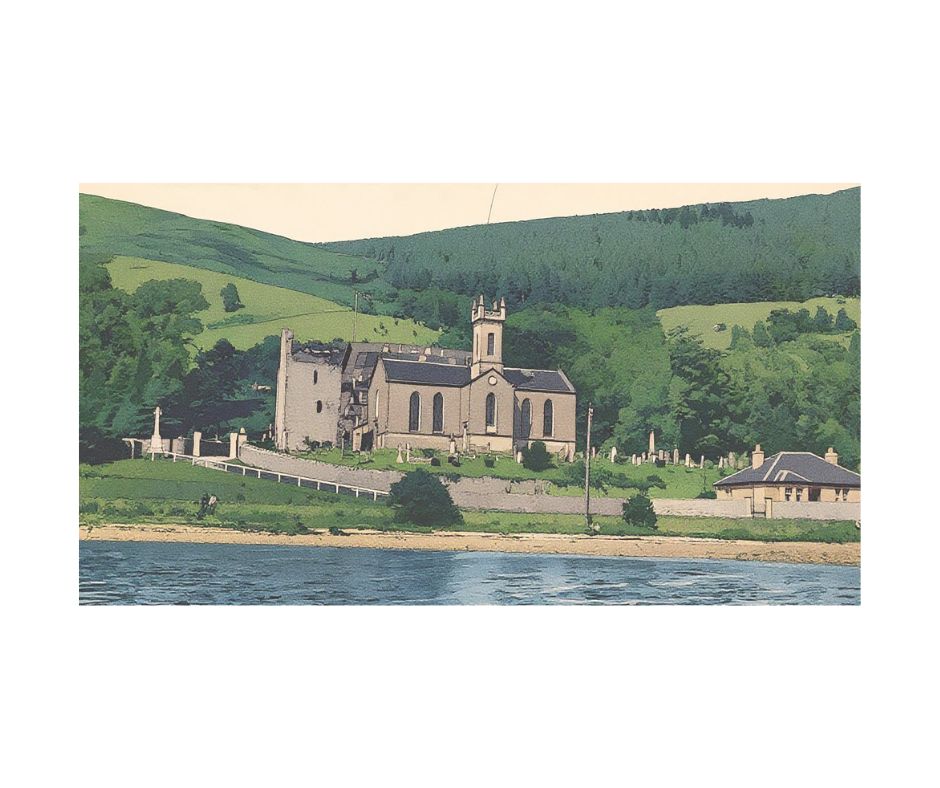
As shared on Kilmun Community Council’s website (Kilmun Community Council | Giants Burn Windfarm) this evening, we must acknowledge AND applaud this very robust objection as submitted to the Energy Consents Unit (ECU) on behalf of those who live within Kilmun Community Council area. Well done to all concerned.
Holy Loch Nature Reserve: the serious risks posed by the Giant’s Burn Windfarm proposal (as published in Dunoon Observer today)
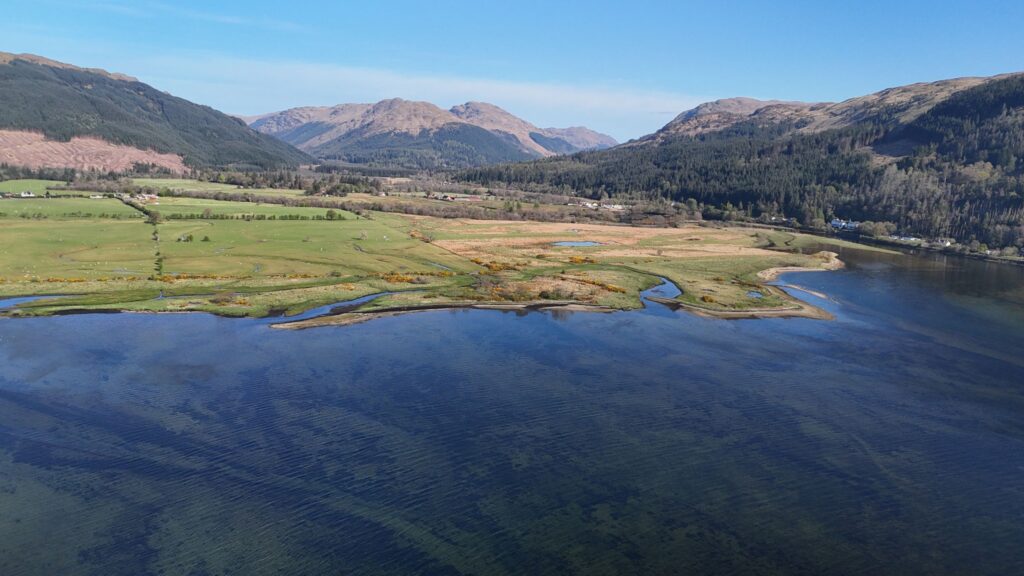
Sir, in 2009 a Scottish Government Reporter turned down a windfarm development in Cowal’s hills. His reasons included:
1 – “Because of its conspicuous position on the spine of a peninsula the wind farm would have unacceptable adverse impacts on visual amenity for places on coasts of the Firth of Clyde, most markedly on Bute and on the eastern side between Gourock and Largs, . . and on important tourist routes on the coasts and on the waters of the firth”.
2 – The wind farm “would also have an unacceptably high risk of causing significant deterrence to tourism, which is of exceptional economic importance to Cowal and the Firth of Clyde islands, contrary to the criterion of ‘no significant adverse effect on local communities’.”
What has changed since that time? Now tourism is even more important, but the biggest change is that the proposal in 2009 was for 70-metre turbines. Statkraft are proposing 200-metre turbines for the Giant’s Burn Development. These would be visible all over the Clyde Estuary with flashing red aircraft lights and continual background noise.
If this was not bad enough, the proposed site is on an undisturbed peatland. The developer has stated that the foundation for each turbine would consist of a minimum of 1000 cubic metres. This peat would be stored but would then dry out thus contributing to the Carbon Dioxide in the atmosphere. The hardcore roads, even if floated, will act as drainage channels with an initial expulsion of water during construction and then continuously run-off during the life of the project. This will result in the lowering of the water table and increased flooding, particularly in Sandbank and Dunoon. There will be erosion of peat into the Holy Loch with the pollution adversely affecting the biota. The developer has proposed sediment traps, but these are rarely maintained and regularly overflow bringing sediment and debris into the loch.
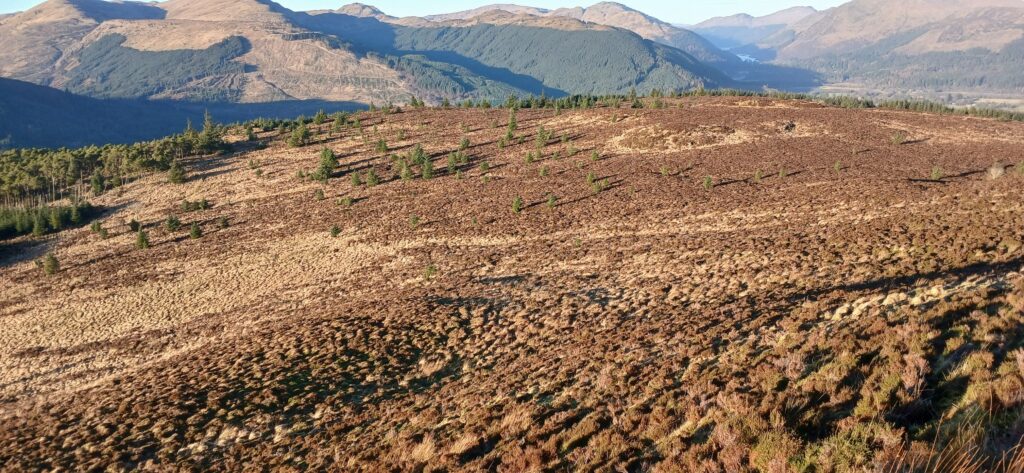
The risk to the very rare, naturally recovering seagrass meadow on the bottom of the Holy Loch is a critical concern. This fragile ecosystem, a key indicator of the loch’s improved health, is extremely vulnerable to the fine sediment that would be released from the peatland. This is particularly worrying as the loch’s ecosystems are only just recovering from the major pollution caused by the American base, local industry, and agriculture. Peat runoff would cloud the water, reducing the sunlight essential for photosynthesis and effectively smothering the seagrass plants, thereby reversing years of recovery.
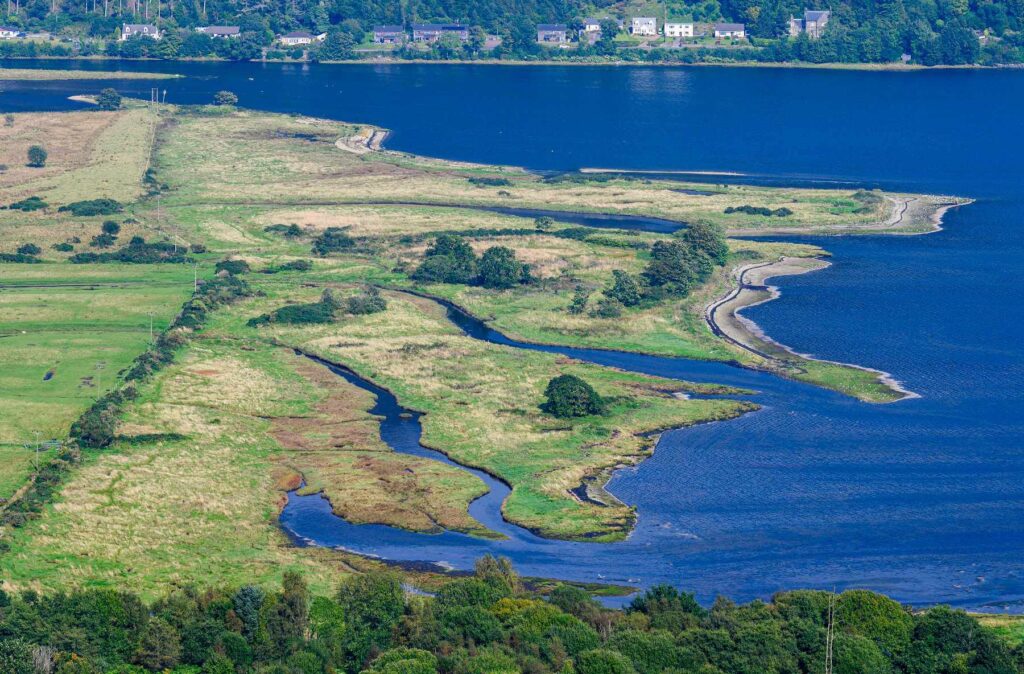
Furthermore, the highly biodiverse saltmarsh communities, comprising at least 2000 species, on the Holy Loch Local Nature Reserve and adjacent Scottish nature conservation site, are also in grave danger. Many species new to science have recently been identified living on the marsh. This ecosystem, which acts as a vital buffer between the land and the sea, depends on a specific balance of salinity and nutrients. The continuous flow of peat-laden water during tidal inundations would alter the chemistry of the marsh, polluting habitats and threatening the unique invertebrate community that thrives there, thereby disrupting the local food web.
It is deeply concerning that Statkraft has not, at any stage, contacted the nature reserve for specific biodiversity data from its extensive research programme. As a result, by definition, Statkraft cannot have adequately assessed the impact on this protected site with its many species yet to be formally described and named. Local extinction of species before they’ve even been described by science could easily result from peat pollution events.
Finally, the entire plankton cycle, the foundation of the loch’s marine ecosystem, would be destabilised. The influx of dissolved organic carbon and nutrients from the peat would trigger harmful algal blooms, which deplete oxygen and produce toxins. Simultaneously, the increased turbidity from the sediment would reduce the light available for phytoplankton, the microscopic plants at the base of the food chain. This twin assault would have a catastrophic impact on fish, birds, and other marine life that depend on a healthy plankton population.
In conclusion, the Scottish Government is spending millions to restore peatland and sea grass in the lochs. This project would have the opposite effect with peat desiccation releasing Carbon Dioxide into the atmosphere and the resultant pollution in the loch damaging the self-regeneration of sea grass, and disturbing its delicate chemical balance which is the basis of the Holy Loch’s exceptionally biodiverse, stable and unique ecosystem.
As John Swinney said, “the appropriate windfarm in the appropriate site,” THIS IS NOT THE APPROPRIATE SITE.
Gordon Holm BSc FGS and Dr. Neil Hammatt PhD
Navigating the Energy Consents Unit website
It is not necessary to register with the Energy Consents Unit in order to submit an application – but you can do so if you wish and submit directly on the website.
If you find it easier, you can simply write or type your objection and email it to representations@gov.scot
If you prefer, you can simply post it to Energy Consents Unit, 5 Atlantic Quay 150 Broomielaw Glasgow G2 8LU
Take your time and read through the parts of the Environmental Impact Assessment (EIA) that you feel you will wish to comment on. You will find this on the Energy Consents Unit website Scottish Government – Energy Consents Unit
Go to the ‘Search’ tab, then ‘simple search; and then type in Giant’s Burn
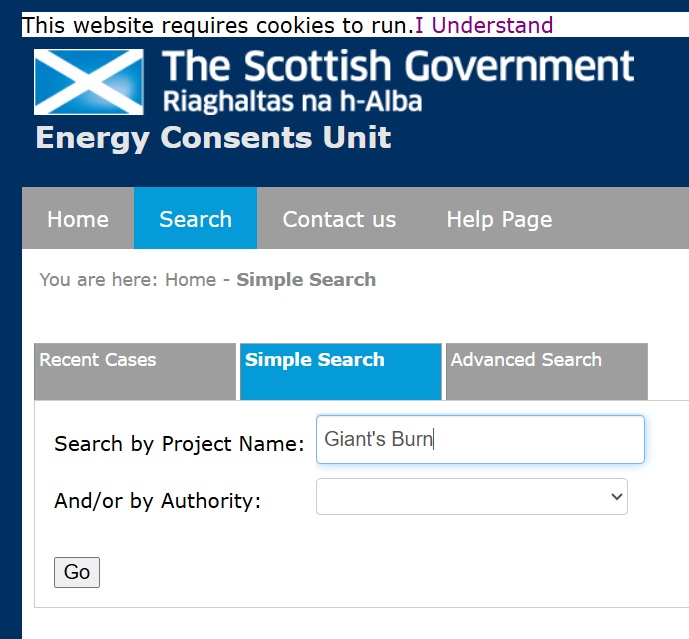
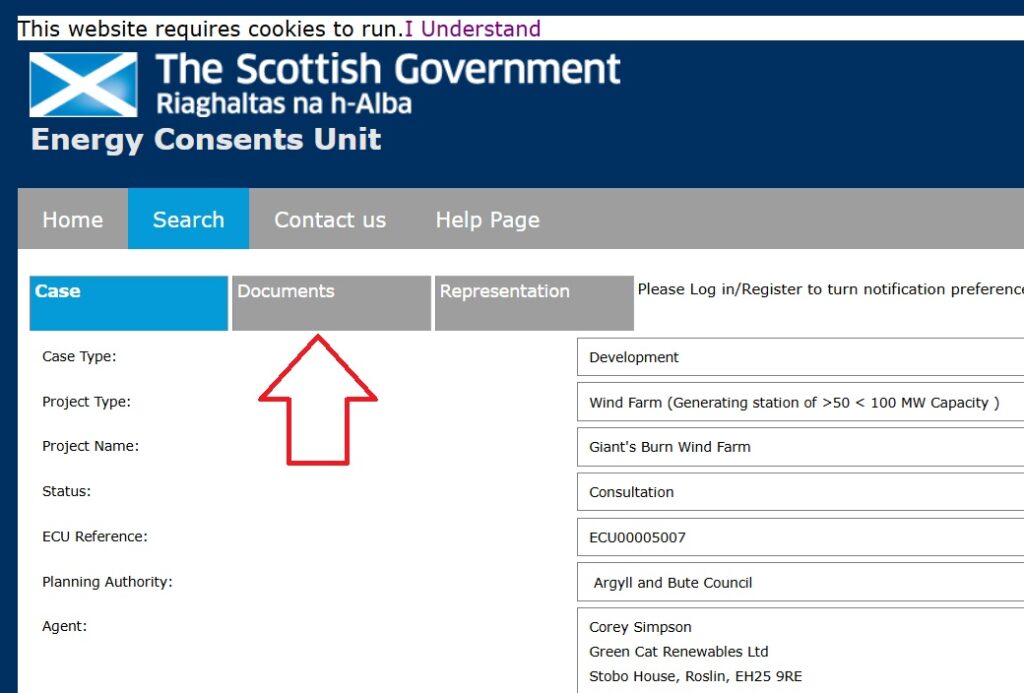
This should take to you to the application. If not, search for the application using the reference number: ECU00005007
You can then search through the application documents…….you may wish to download or print some of them given how long they are (there are printed copies in the Dunoon Library and the Rothesay Library).
How to object: guidance from Scotland Against Spin
John Muir Trust – guide to writing responses to planning applications
NOISE (by Stuart McInnes)
Stuart McInnes of Ardrishaig has contacted us to share his written summary, drafted for local community councils and others, to provide people with a simplified description to help in understanding the issues with infrasound noise from windfarms.

‘As a resident of Ardrishaig, I am very much opposed to the proposed High Brenfield Windfarm near the village, by the company Low Carbon. I have a background as a musician and sound engineer and have particular concerns over infrasound produced by these installations.
Following a face to face meeting with a family in the Kintyre peninsula, I was shocked to hear of their suffering, poor health symptoms due to the proximity of these wind farms. I would very much like the Scottish Government and the medical profession to turn their focus on investigating these symptoms and ultimately protecting the public rather than being swept along with Ed Milliband’s crazed and reckless path to net zero.
The subject of infrasound is rather technical and the environmental impact assessment produced by wind farm companies are for the most totally bamboozling. I tried to simplify things at Community Council meetings and produced a little document on the subject, which I have attached here. Hopefully, it will be of some help.’
Our ‘OBJECTNOW’ objection tool is now live!
Giant’s Burn Wind Farm Object Now
The above links to our 𝐎𝐍𝐋𝐈𝐍𝐄 𝐎𝐁𝐉𝐄𝐂𝐓𝐈𝐎𝐍 format courtesy of our friends at Object.Now who have been working very hard to support us in generating this as we reviewed the Environmental Impact Assessment (EIA) in detail. This tool will allow those who wish to use it, to generate their objections and send directly to the Energy Consents Unit (ECU) 𝘸𝘪𝘵𝘩𝘪𝘯 𝘮𝘪𝘯𝘶𝘵𝘦𝘴.
There is ALSO the option to edit the template as you go, add in additional information and change the wording to suit.
Equally you may wish to simply download your draft letter, USE AS A TEMPLATE, and work on it at your leisure and email directly to the Energy Consents Unit. Further information and support will be shared here shortly. 

PUBLIC EVENT: A Call to Action…..

Further to Statkraft’s planning application submission for the Giant’s Burn Windfarm, SAVE COWAL’S HILLS invites all to a Public Meeting in Dunoon Burgh Hall at 7.30pm on Thursday August 7th. PLEASE JOIN US to hear our campaign updates, to lend your support and to access our support with your objections.
‘A brief lesson in windfarm economics’….
People sometimes wonder why a landowner would want to host a wind farm. The answer, as this court case shows, is they are being offered rents that would tempt a saint,’ is how Dr John Constable, director of the REF charity, puts it.
‘As a result, the green subsidies that make these high returns possible are now at an unsustainable level.’

Details of how the public’s cash is being splurged are laid bare in an ‘opinion’ on the litigation that was published by Lord Sandison, one of Scotland’s most senior judges, on July 10.
It reveals that Moran’s company Glenfiddich Wind Limited, which runs his estate’s wind farming operations, is suing EDF’s operating firm Dorenell Windfarm Limited for ‘sums allegedly underpaid’ under the terms of its lease.
The claim covers a three-year period from 2022 to 2024. During that time, the contract between the two stipulated that Moran’s firm would be paid either a ‘gross income rent’ based on a proportion of revenues generated by the turbines, or a ‘minimum annual rent’ of £6million, depending on which was higher.
In 2022, he received £8,496,981. The following year, the figure was £9,480,725, and in 2024 it reached £10,406,641.
(summary from Scotland Against Spin – Leading the fight against Scottish wind energy policy)
The court judgement can be read here:
2025csoh62-glenfiddich-wind-limited-against-dorenell-windfarm-limited.pdf